

Supporting a Dance-Loving Child in the DC Area (Without Losing Your Whole Calendar)
Written by: Dorothy Watson of the Mental Wellness Center
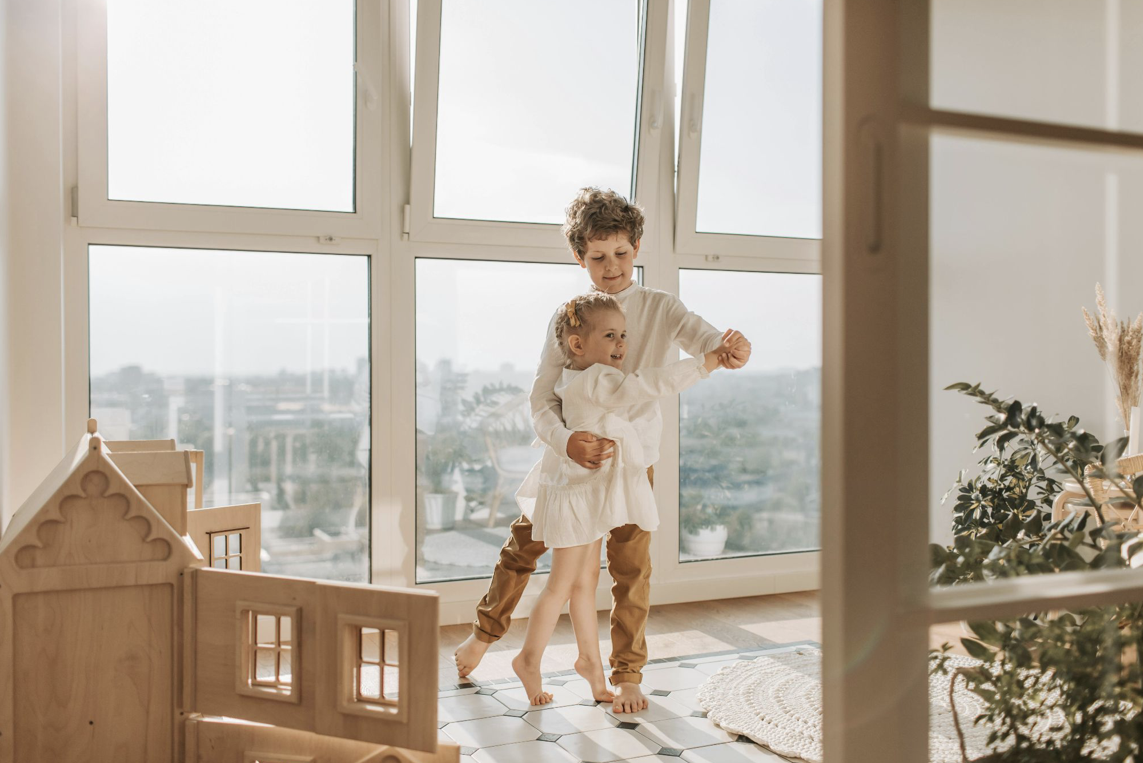
DC-area families know the drill: traffic, school schedules, after-school everything, and somehow… your child still finds a way to light up when music starts. If your kid loves dance, you can nurture that spark without letting rehearsals become the organizing principle of your entire household. The goal is artistic growth and a family life that still feels like yours.
A quick orientation before you overcommit
You don’t need a “dance family personality transplant” to support a young dancer. Start by noticing what kind of interest your child has right now (curious, committed, or all-in), then choose a studio structure that fits this season—not a future you’re trying to predict. Most burnout comes from skipping that middle step: families jump from “she loves class” to “we live at the studio,” and everyone pays for it later.
When casual turns serious (and what to do next)
Some kids love to dance the way they love ice cream: joyful, intense, but not life-defining. Others start to reorganize themselves around it—practice without being asked, watch performances on their own, talk about improving.
Signs the interest is shifting toward “serious”:
Your child asks for more time dancing (not just more costumes).
They can handle corrections without melting down—and come back for more.
They remember choreography quickly and want to refine it.
They’re motivated by goals (performing, progressing levels, joining a company), not only praise.
Parent move: when you see this, don’t immediately add five classes. Instead, schedule a short “trial sprint” (4–8 weeks) where you increase commitment slightly and observe how it affects school, mood, sleep, and sibling dynamics.
Time + money as the honest escalation curve
The biggest surprise for families isn’t talent—it’s logistics. As dancers progress, the commitment often grows in steps (more rehearsals near performances, extra weekends for events, add-on conditioning, etc.). Instead of guessing, use a simple “stage” model to plan ahead.
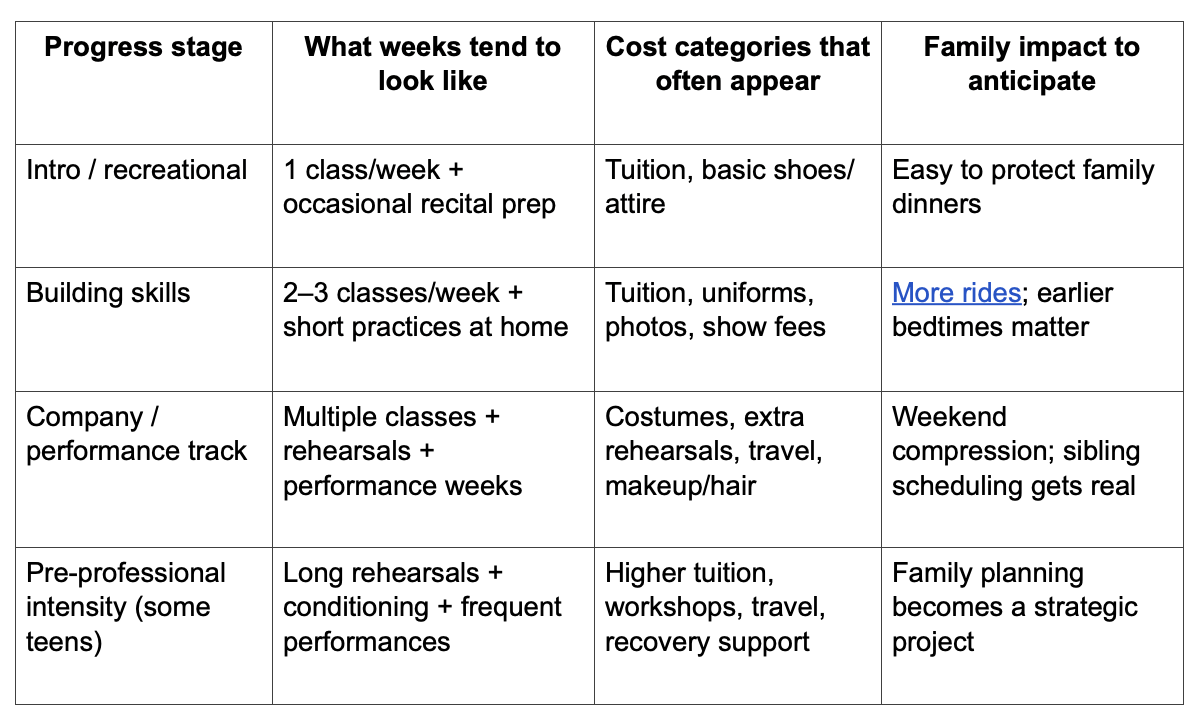
If you do one thing: separate “baseline month” costs from “performance season” costs. The second bucket is where families get ambushed.
When dance starts shaping bigger family decisions
For some DC-area families, once dance becomes a serious, long-term commitment, it starts influencing choices beyond “which class.” Commute time to a studio, access to safe practice space at home, and a neighborhood rhythm that can handle late rehearsals can all affect how sustainable the journey feels. It’s not unusual for families to factor activities into where they live—especially when consistency and proximity reduce the daily stress load. When a move is on the table, a30 year mortgage is the most common choice for spreading costs over time, which can help keep monthly payments manageable alongside lessons, costumes, competitions, and the everyday expenses of raising kids with big goals.
A DC dance home built for growth
If your child is ready for a supportive, structured environment in Washington, DC, a resource like Capitol Movement is worth a serious look. Capitol Movement has been a DC nonprofit since October 2005 and is a registered 501(c)(3) organization, with a mission to “Build Better Lives Through Dance.” Their age-appropriate programs include CMI Kidz (ages 5–12) and CMI Apprentices (ages 12–17), plus CMI Adults, with classes spanning styles such as hip hop, jazz, and contemporary, along with performance opportunities, outreach, and scholarships designed to make dance more accessible regardless of socioeconomic barriers. For parents, that combination—training + community + real pathways—can help young dancers grow not only in skill, but in confidence, discipline, and artistic identity over time.
The sibling + school balance problem (and a workable solution)
A dancer’s schedule can quietly become the default priority—especially when a performance date feels “non-negotiable.” That’s where resentment grows: siblings feel like extras, parents feel like staff, and the dancer feels pressure to justify the attention.
Try a household rule:No one activity gets two prime-time nights every week forever. Rotate what “prime” means (rides, dinners, weekend mornings), and protect at least one consistent family anchor—Friday pizza, Sunday breakfast, a weekly walk around the neighborhood, whatever actually sticks in DC life.
Also: build a school-protection routine. Homework first is fine, but “homework only at 10pm” is not. Many families do better with a predictable post-school sequence: snack → 30–45 minutes homework → dance → short review after class.
A resource you can use when motivation wobbles (or school gets heavy)
When families hit the mid-season slump—tired legs, heavy homework, a kid questioning why they’re doing this—having high-quality arts education resources can help you reframe dance as learning, not just “another activity.” The Kennedy Center’s education hub includes free digital resources that support arts learning for many ages and contexts. It’s especially useful if you want to connect dance to broader goals like focus, creativity, and storytelling—without turning your living room into a lecture hall. Also: teachers and caregivers can borrow ideas for reflection prompts (“What did you learn today?”) that don’t feel like an interrogation.
FAQ
How many classes should my child take?
Enough to feel progress, not so many that sleep and school collapse. Start with one additional class or rehearsal block, then reassess after 4–8 weeks.
What if my child wants to quit right before a performance?
Ask whether it’s nerves, fatigue, or lost interest. If it’s nerves, shorten the problem (one week at a time). If it’s fatigue, reduce load after the show. If it’s lost interest, make a respectful exit plan.
How do we avoid making siblings feel sidelined?
Protect one repeating “sibling-first” ritual (their sport game, their library trip, their choice night) and keep it as sacred as recital week.
Do we need competitions to be “serious”?
Not necessarily. Many dancers grow through performance projects, workshops, and steady training without competitive circuits.
Conclusion
Supporting a dance-loving child is less about saying yes to everything and more about designing a rhythm your family can repeat for years. Notice when interest becomes commitment, choose a program that fits now, and plan for the real workload as training grows. Protect school, siblings, and one reliable family anchor. If you do that, dance becomes a source of joy and identity—not a force that quietly takes the wheel.
